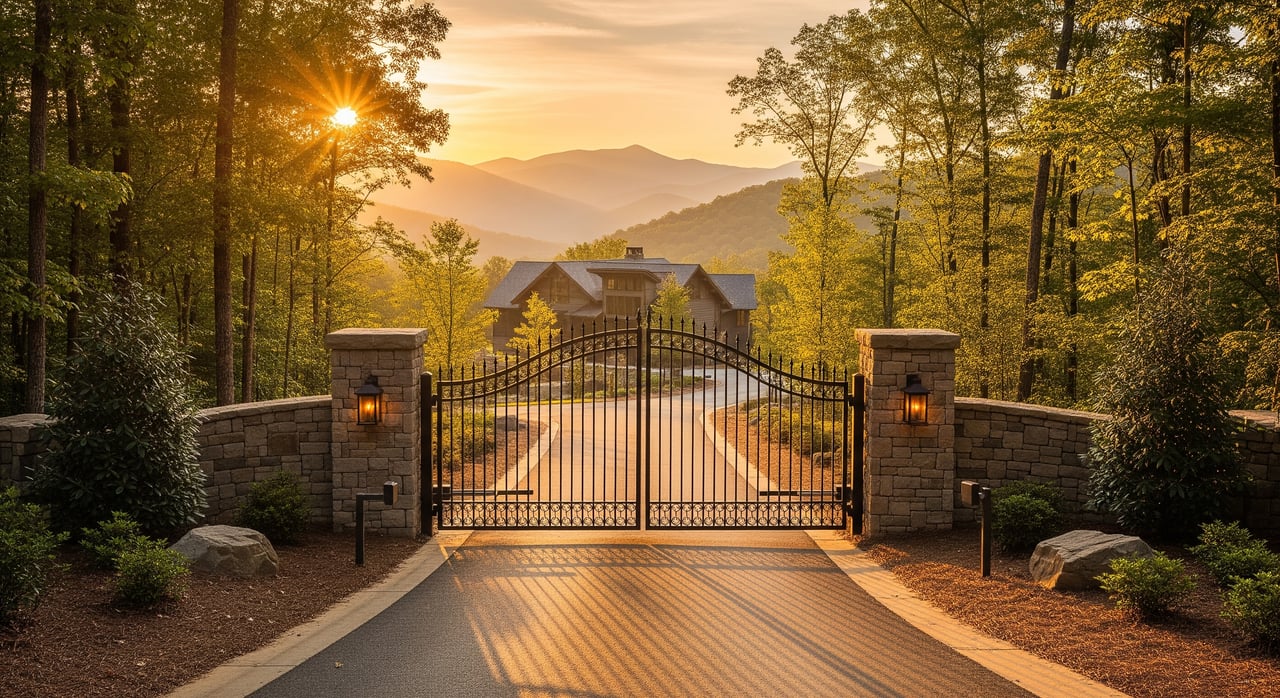
Looking at gated communities in Sapphire but not sure how to compare your options? You want privacy, mountain views, and an easy lock‑and‑leave lifestyle, especially if this will be a second home. In this guide, you’ll learn how to evaluate amenities, HOA rules, finances, and mountain infrastructure so you can buy with confidence in Sapphire, Transylvania County. Let’s dive in.
Why choose Sapphire gated living
Sapphire sits in the mountains of Transylvania County, where the scenery, cool summers, and outdoor recreation draw second‑home buyers from across the country. Gated communities here appeal if you want controlled access, social amenities, and lower‑maintenance ownership while you are away.
Mountain terrain shapes these communities in real ways. Elevation, road grades, drainage, and private utilities all affect daily living and long‑term costs. Many owners rely on community‑managed services like private roads, shared water systems, and snow removal, which makes understanding the HOA structure and finances especially important.
Amenities to compare
Not all Sapphire gated communities offer the same package. Make a list of must‑have features versus nice‑to‑have perks, then compare carefully.
Security and access
Controlled entry points increase privacy and can simplify guest management. Ask how gate codes, visitor passes, and contractor access work when you are out of town. Stronger security can also mean more steps for deliveries and vendors, so make sure the process fits your lifestyle.
Recreation and clubs
You will see options like golf, clubhouses, pools, tennis or pickleball, fitness centers, and trail systems. If you want an active social scene, these amenities add value. If you prefer a quieter retreat, keep in mind that more amenities can raise dues and may attract seasonal crowds.
Natural setting and homesites
Many communities offer wooded privacy, stream frontage, small lakes, or long‑range views. These settings are beautiful but can bring extra maintenance like erosion control or tree work. Steeper sites may also come with building constraints or higher costs to stabilize slopes and manage drainage.
Low‑maintenance services
Look for services that matter when you are away. Landscaping, exterior maintenance, trash service, snow removal, and common‑area insurance are often included in dues. Confirm whether services extend to your specific home or just to shared areas so you know what you must handle separately.
Community life
Organized events and owner clubs can make it easier to meet neighbors and feel connected. On the other hand, communities with an active calendar usually have more rules and volunteer expectations. Decide how much structure you want.
HOA rules and governance
Understanding how an HOA operates is essential in the mountains, where private roads, gates, and shared systems depend on predictable management and funding.
How HOAs are structured
Some developments have a master association plus sub‑associations for areas like golf or condo clusters. Ask which association controls roads, utilities, and amenities. Review the board structure, meeting schedule, and architectural review process for exterior changes.
Rules that affect second‑home owners
- Short‑term rentals: Policies vary widely. Some communities prohibit them, others set minimum stays or registration requirements. If rental income is part of your plan, get the rule in writing.
- Guest and contractor access: Understand how your guests, housekeepers, and service providers get through the gate.
- Use restrictions: Exterior paint colors, satellite dishes, solar panels, fencing, and even firewood storage may require approval.
- Maintenance obligations: Clarify what the association handles versus what you must maintain, including driveways, private septic lines, and landscaping.
What dues should cover
Dues often fund road maintenance, security, amenity operations, common‑area utilities, landscaping, and master insurance. Ask for a detailed list. For private systems or amenities, the budget should match the community’s actual needs, especially given the region’s weather and terrain.
Reading the financials
Request 2 to 3 years of financial statements and the current operating budget. Look for a reserve study and a healthy reserve fund that matches long‑term projects like road resurfacing, culvert repairs, gate replacements, and facility updates. Review the history of special assessments and the board’s policy for future assessments. Check delinquency rates to understand cash flow stability.
Mountain infrastructure basics
Mountain properties often run on private wells and septic systems and rely on private roads. These details matter when you plan occupancy, renovations, and long‑term costs.
Water and wastewater
Many Sapphire homes use private wells and septic systems. Septic system type and capacity can limit bedroom count and guest usage. Ask about age, permit history, and the most recent inspection. Some communities operate shared water or wastewater systems, which the HOA or a utility authority maintains. Confirm who owns the system and who pays for repairs.
Roads and winter access
Private roads are commonly maintained by the HOA. In a mountain setting, steep grades, drainage, and storm damage can drive costs. Ask about snow and ice removal plans and past access issues. If you plan to visit in winter, request the community’s seasonal access history.
Lot topography and building controls
Topography influences what you can build and how much site work will cost. Setbacks, tree protection, and erosion control requirements typically go through an architectural review process. If you plan exterior updates, ask about submission steps, typical timelines, and common reasons for denial.
Insurance considerations
The master policy should cover common areas, roads, gates, and facilities, while owners typically carry their own property and liability policies. Ask for insurance certificates, limits, and deductibles. If a community has a history of flood, storm, or landslide issues, factor that risk into your decision and coverage.
Due diligence checklist
Before you go under contract or during your due diligence period, request the following from the seller or HOA:
- CC&Rs, bylaws, rules and regulations, and architectural guidelines
- HOA meeting minutes for the past 12 to 24 months and recent board agendas
- Current budget, last 2 to 3 years of financials, and the reserve study
- Dues amount, what dues include, and a history of special assessments
- Delinquency report and collection policy
- Master insurance certificates and deductibles
- Records of major repairs or projects from the last 5 to 10 years
- Copies of short‑term rental rules and any registration process
- Gate, guest, and contractor access protocols
- Community map showing common areas, easements, and road ownership
- Any pending litigation or claims involving the HOA
Key questions to ask
- What exactly do dues cover and what is excluded?
- Who is responsible for roads, snow removal, storm debris, and culverts?
- Are short‑term rentals allowed, and what registration or fees apply?
- What special assessments were levied in the past five years?
- What capital projects are planned and how will they be funded?
- How long do architectural approvals typically take for renovations?
- Are water and wastewater systems private or public, and who maintains them?
- How do guests and contractors access the community when you are away?
- What property management options are available for absentee owners?
Build your local team
For a smooth purchase in Sapphire, assemble a team with mountain and HOA experience:
- A local real estate agent familiar with Sapphire gated communities
- An attorney who understands North Carolina HOA law
- A licensed home inspector with mountain property expertise
- Septic and well inspectors, and a civil or geotechnical engineer for steep lots if you plan to build
- A surveyor to confirm boundaries, easements, and ingress and egress
Common concerns, solved
- Concern: Hidden ongoing costs from special assessments or aging roads.
- Solution: Review 3 or more years of financials, the reserve study, and recent projects to see if reserves match real needs.
- Concern: Limits on short‑term rentals that affect income.
- Solution: Get the rental policy in writing, including minimum stays, registration steps, and any fees or insurance requirements.
- Concern: Access and maintenance when you are away.
- Solution: Learn gate procedures, ask about property management options, and confirm how vendors and guests are admitted.
- Concern: Ability to renovate or personalize.
- Solution: Read architectural rules closely and ask about typical approval timelines and common restrictions.
- Concern: Seasonal access and emergency response.
- Solution: Request winter maintenance plans and ask about historical road closures and local emergency services coverage.
How we help you compare
Choosing a gated community in Sapphire is easier when you have local guidance and a clear framework. You get concierge‑style support, modern digital tools, and the benefit of deep local experience across Western North Carolina mountain communities. Whether you live out of state or plan to be here part‑time, we help you line up inspections, review HOA documents, coordinate vendors, and keep the process moving at your pace.
If you are exploring Sapphire for a second home, our role is to help you match lifestyle priorities to the right community while protecting your long‑term investment. When you are ready, reach out to Donna Teresa Hodges and our team. We are here to answer questions, open doors, and make your mountain purchase feel simple.
Ready to compare your options in Sapphire? Connect with Donna Hodges to start your search today.
FAQs
What should I budget for HOA dues in a Sapphire gated community?
- Dues vary by amenity level and services provided. Ask each HOA for a dues breakdown that lists road maintenance, security, amenities, utilities, landscaping, and insurance so you can compare apples to apples.
How do short‑term rental rules work in Sapphire HOAs?
- Policies differ across communities. Some prohibit short‑term rentals while others allow them with registration, minimum stays, or fees. Get the rule and process in writing before you buy.
What mountain utilities should I verify during due diligence?
- Confirm whether the home uses a private well and septic system or a shared/community system. Request permit history, inspection reports, and maintenance records, and identify who is responsible for repairs.
Who maintains roads and handles snow removal inside the gate?
- In most gated communities, the HOA maintains private roads and manages snow and ice removal. Ask for the maintenance plan, vendor contracts, and any recent road work history.
How does the architectural review process affect renovations?
- Most communities require approval for exterior changes. Request architectural guidelines, submission requirements, and typical timelines so you can plan projects without delays.
What documents should I review before closing on a gated home?
- Obtain CC&Rs, bylaws, rules and regulations, architectural guidelines, recent meeting minutes, the budget and financials, reserve study, insurance certificates, and records of major projects and assessments.